
Buying a second property is an exciting milestone that can build long-term wealth. But financing that purchase requires navigating two very different sets of rules depending on how you plan to use the home.
Compare second home and investment property mortgage rates anonymously on Visbl today. No personal information required, no spam calls, no obligations.
Choosing a second home vs investment property mortgage depends entirely on your personal use of the home. A second home is a property you live in for part of the year, which allows you to qualify for a lower down payment and lower interest rates. An investment property is bought to generate rental income, which carries higher default risks for lenders and leads to stricter loan terms.
Financing a second home typically requires a ten percent down payment, while investment properties usually require fifteen to twenty-five percent down. Lenders also charge higher interest rates on investment properties and enforce strict cash reserve rules because they view non-owner-occupied loans as higher risks.
Before you shop for your next property, you must understand how lenders define these two options. Let’s look at what defines a second home vs. an investment property to help you make the right choice.
Second Home Vs Investment Property Mortgage: What Defines a Second Home vs. an Investment Property?
Lenders and tax agencies use precise tests to separate a second home from an investment property. These rules matter because they change your loan options, interest rates, and down payment requirements. Buying a house for your own personal use is different from buying one to make money, and the industry has strict lines to prove which is which. Before you shop, you should understand how these two categories work under federal guidelines.
The Rules for a Second Home
To qualify as a second home, the property must be a single-unit dwelling that you control and live in for part of the year. Lenders generally require the home to be located at least 50 miles away from your primary residence. You must also use the property yourself. The Internal Revenue Service (IRS) states that you must live in the home for more than 14 days a year. Or at least 10% of the total days you rent it out to others at a fair market rate, whichever number is greater. If you do not meet these personal use rules, tax agencies and banks will treat the property as a business asset.
The Rules for an Investment Property
An investment property is a real estate purchase made primarily to generate rental income or long-term profit. You do not need to live in the home at all to qualify for this path. Unlike second homes, investment properties can have multiple units, such as a duplex or a fourplex. Lenders view these transactions as business deals rather than personal purchases. Because there is no personal occupancy requirement, you can buy these properties anywhere, even right next door to your primary residence.
Why Lenders Care About the Difference
Lenders look closely at your intent because it affects their financial risk. Homeowners are much more likely to keep paying their primary or secondary home loans during tough times. If money gets tight, an investor is far more likely to default on a rental property mortgage before their own house. This difference in risk is why comparing second home vs investment property mortgage requirements is so important. Lenders charge higher interest rates and demand larger down payments to cover the extra risk of non-owner-occupied loans.
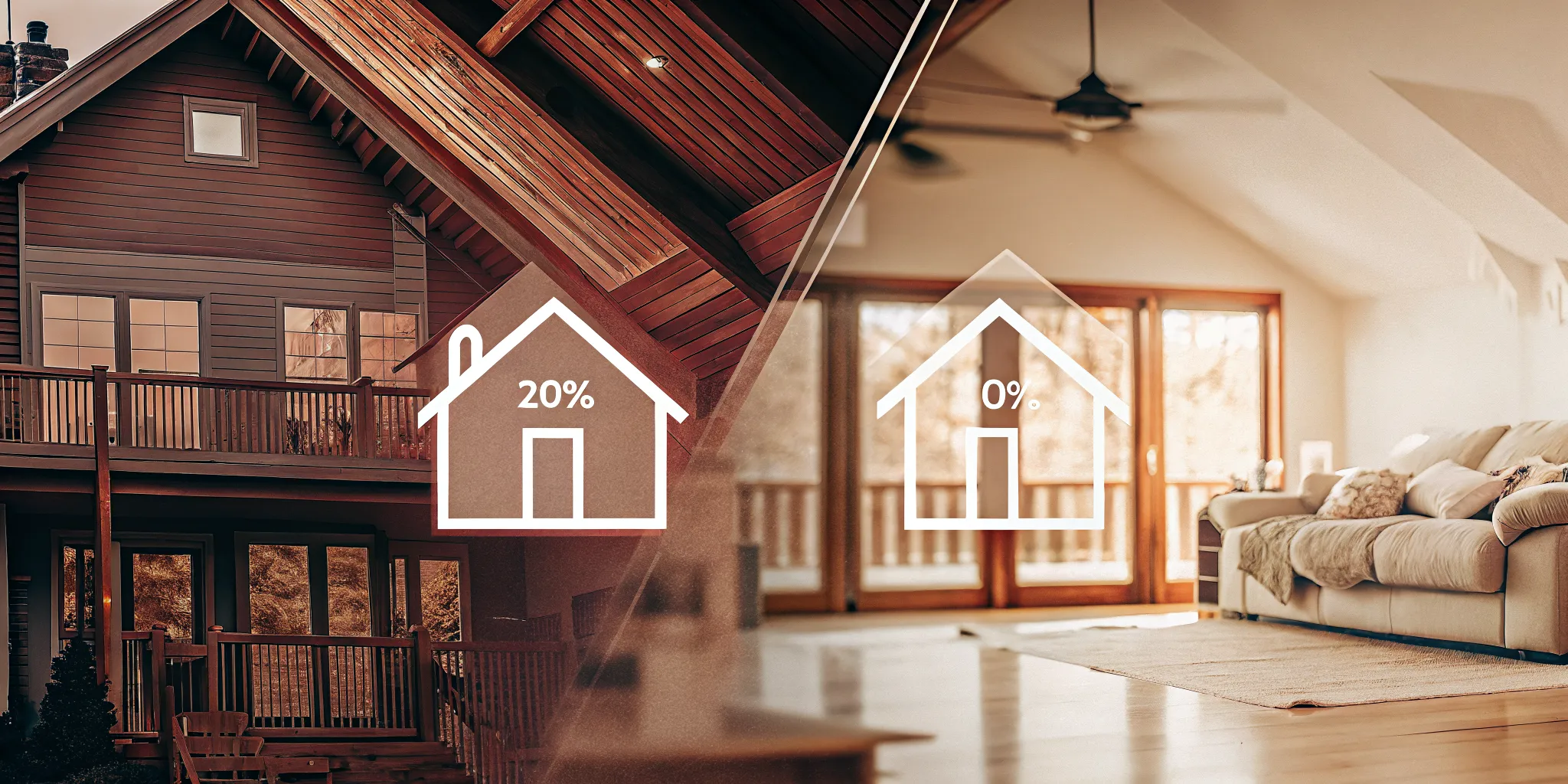
Down Payment Requirements: Breaking Down the Difference
Buying another house means you must plan for upfront costs. The money you need to put down is a main difference when you look at a second home vs investment property mortgage. Lenders set distinct rules for each property type to protect themselves from loss. Understanding these rules helps you prepare your cash before comparing mortgage options for different property types.
Down Payment Ranges for Second Homes
Lenders treat a second home much like a primary residence. If you buy a vacation home for personal use, you can get a conventional loan with a lower down payment. Key facts about second home down payments:
- Minimum down payment is typically 10% of the purchase price
- A strong credit score is required to qualify for the 10% minimum
- Borrowers who put down less than 20% must pay private mortgage insurance
- PMI adds to your monthly payment until you reach 20% equity
With down payments in this range, many buyers need to pay private mortgage insurance costs until they build sufficient equity.
Higher Down Payments for Investment Properties
An investment property requires a much larger down payment. You will typically need to put down at least 15% to 25% of the purchase price. Here is how the down payment scales by property type:
- Single-family rental home: minimum 15% down
- Two-unit properties: typically 20% down
- Three to four-unit properties: often require 20% to 25% down
- Higher cash requirements protect the lender from rental market risk
Why Lenders Require More Cash Upfront
Lenders look at rental properties as high-risk loans. If a borrower faces financial hardship, they will protect their primary home and second home first. They are much more likely to stop paying the mortgage on a business property that they do not live in. Because of this risk, government-backed loans have strict rules. The Federal Housing Administration (FHA) does not offer loans for investment properties. VA loans are also restricted to primary homes by the Department of Veterans Affairs, which you can verify on the VA.gov portal.
Reserves and Extra Cash Requirements
Lenders also want to see that you have extra cash in the bank after you close the loan. This extra money is called reserves. For a second home, lenders usually require you to show two to six months of mortgage payments in reserve. For an investment property, you will need six to twelve months of payments in the bank. This cash cushion ensures you can pay the mortgage even if your rental property sits empty for a few months.
How Mortgage Rates Compare Between Second Homes and Investment Properties
When shopping for a loan, understanding how property use affects your pricing is key. Lenders view a second home vs investment property mortgage as having two distinct levels of risk. Because of this risk pricing, mortgage rates on second homes are generally 0.25% to 0.50% higher than the rates on primary residences. In contrast, investment property rates carry an even larger premium, often sitting 0.50% to 1.00% above primary home rates. If you want to find the best deal, you should monitor mortgage rates for your next property to track these changing margins.
The Risk Pricing Gap Explained
Lenders use risk-based pricing to set mortgage terms. When a borrower faces financial stress, they will almost always pay their primary mortgage first. They will pay their second home second, and their investment property last. Lenders view investment properties as business tools, which carries higher default risk. Because of this risk, Fannie Mae and other mortgage entities charge higher upfront fees on these loans. These fees translate directly into higher interest rates for the borrower. According to guidelines set by federal housing agencies like the U.S. Department of Housing and Urban Development, these risk premiums help offset potential losses during economic downturns.
Property Liquidity and Borrower Stress
Liquidity also plays a major role in how lenders set rates. A typical vacation home in a resort area is much harder to sell quickly during a downturn than a standard single-family home. Lenders know that if they must foreclose on a highly specialized vacation home, it may take a long time to recover their funds. For investment properties, the risk is tied directly to rental market health. If a tenant stops paying rent, the borrower may struggle to cover the mortgage payment. This double layer of risk is why investment property loans require more strict underwriting, higher down payments, and higher rates.
Why Rate Shopping Matters More for Investors
Investment property loans do not benefit from the same federal backing as primary home loans. Because of this, individual banks and private lenders have more freedom in how they price them. This means the rate gap between two different lenders can be much wider for an investment loan than for a standard home loan. Shopping around and comparing rates across multiple lenders can save you thousands of dollars over the life of the loan. Knowing your exact costs is crucial before you buy.
Qualification and Income Rules for Each Property Type
Lenders look at your finances in different ways when you buy another property. The rules for a second home are not the same as those for an investment property. Understanding these rules helps you prepare for the application process and shop for the right loan product before you make an offer.
How Debt to Income Ratios Work
Your debt to income ratio is a key factor for any mortgage approval. For a second home:
- Lenders evaluate your debt based on your primary income source alone
- Future rental income is not counted because you will live there part of the year
- You must have enough regular income to cover both your current home and the new second home payment
For an investment property, the calculation changes:
- Lenders let you use up to 75% of the projected rental income to qualify
- You will need a market rent analysis from an appraiser
- This extra qualifying income makes it easier to get approved even with other monthly debts
Cash Reserve Requirements
Cash reserves are liquid funds you must keep in the bank after your loan closes. Lenders want to know you can pay your mortgage if you face a financial emergency. The reserve amount is measured in months of principal, interest, taxes, and insurance payments. This is known as the monthly payment reserve requirement. Second homes are seen as lower risk:
- Require two to six months of payments in reserve
- Lower threshold reflects lower default risk for personal-use properties
Investment properties face higher vacancy risk:
- Require six to twelve months of payments in reserve
- Higher threshold protects lenders during rental income gaps
Credit Score Thresholds
Credit scores also play a role in how lenders evaluate your loan file. While both property types require good credit, investment loans have stricter score cutoffs. You may qualify for a second home mortgage with a credit score of 625 or higher. An investment property loan often requires a score of 680 or more to get the best terms. You can review your borrowing readiness with a checklist that helps you compare conventional loan products and check your options. Knowing your numbers ahead of time gives you more control when you shop for a mortgage.
Tax Treatment: Second Homes vs. Investment Properties
Buying another property changes how you file your taxes with the Internal Revenue Service (IRS). The IRS looks at how you use the home to decide what you can deduct. Your tax obligations depend on whether you buy a second home or an investment property.
The 14-Day Limit for Second Homes
If you buy a second home, you can deduct your mortgage interest and property taxes. But if you rent the home out, you must track your personal stay days closely. Under IRS rules, you can rent the home for up to 14 days a year without paying tax on that rental income. If you rent it for 15 days or more, you must report the rent as income. You can then deduct your rental costs. But your personal stays must still meet the IRS 10% rule. You must use the home yourself for more than 14 days or at least 10% of the total days you rent it out to maintain its second home tax status.
Business Deductions for Rental Properties
Investment properties are treated as business operations by the IRS. You do not get the same personal interest deductions. Instead, you deduct your costs as business expenses. These include mortgage interest, property taxes, insurance, repairs, and home upkeep. You can also use a special tax benefit called depreciation. This allows you to deduct the cost of the building over a period of 27.5 years. This deduction can help lower your taxable net income each year. If your costs are higher than your rental income, you may even be able to write off those losses on your taxes.
Consult a Certified Public Accountant
Tax rules for a second home vs investment property mortgage requirements can be complex. These rules change based on your total income and how long you stay at the property. You should always talk to a certified tax expert before you make a purchase. They can help you plan for these costs and keep your tax filings correct.
Second Home vs. Investment Property: Side-by-Side Comparison
Buying another property is a major step. But the path you take depends on how you plan to use the home. Lenders use different rules to grade your loan based on your personal use of the space. You must understand these rules to prepare your budget and avoid costly surprises during the process.
Key Differences at a Glance
How do these options compare when you apply for a loan? Lenders view rental properties as higher risk than personal vacation spots. Because of this, you will face stricter rules for a rental. These rules affect your down payment, interest rates, and the cash reserves you must keep in the bank. You can use the table below to check the key details for each property type.
| Factor | Second Home | Investment Property |
|---|---|---|
| Primary Use | Personal stay and vacation | Income from rent |
| Occupancy Rules | Must stay 14 days or 10% of rented days | No personal stay needed |
| Minimum Down Payment | Typically 10% | Typically 15% to 25% |
| Mortgage Rate Premium | About 0.25% to 0.50% over primary | About 0.50% to 1.00% or more over primary |
| Debt-to-Income Calculation | Only uses your personal income | Can use up to 75% of rental income |
| Reserve Requirements | Typically 2 to 6 months of payments | Typically 6 to 12 months of payments |
| Loan Availability | Conventional loans allowed | Conventional only; no FHA or VA loans |
| Interest Deductibility | Deductible under second home rules | Deductible as a business expense |
| Depreciation Available | No | Yes |
| Tax Treatment Summary | Personal tax rules apply | Business tax rules apply |
How to Read Your Financing Options
As you plan your next step, you can use online tools to check live market rates. It is smart to monitor mortgage rates for your next property to see how daily shifts impact your payment. A small change in the rate premium can save or cost you thousands of dollars over the life of the loan. Knowing these details helps you shop with confidence.
Check current mortgage rates for second homes and investment properties on Visbl now. Compare options side by side without sharing your personal information.
Lenders want to see that you can handle both your current home loan and the new one. For a second home, you must qualify using your current income alone. But for a rental, you can often use the projected rental income to help you qualify. You can use a checklist to compare conventional loan products and see how different programs handle your debts. Always check these guidelines with a professional before you search for a home.
If you are building the second home or investment property from the ground up rather than buying an existing one, the financing process is different. Review construction loan requirements to understand the additional steps.
Frequently Asked Questions
What is the main difference between a second home and an investment property?
The main difference is how you use the home. A second home is for your personal use, like a vacation house where you stay part of the year. An investment property is bought to make money, usually by renting it to tenants or selling it for a profit. Lenders look at these uses to decide your loan terms and interest rates.
How do mortgage rates differ between second homes and investment properties?
Lenders see rental properties as higher risk than personal vacation homes. Because of this extra risk, investment property rates are usually 0.25% to 0.50% higher than second home rates. You can monitor mortgage rates for your next property to see how these differences affect your actual monthly payment in real dollars.
What are the down payment requirements for a second home vs. an investment property?
You usually need a larger down payment for an investment property because lenders take on more risk. A second home mortgage often requires a minimum down payment of 10% for conventional loans. In contrast, purchasing an investment property typically requires at least 15% to 25% down to secure financing.
Can you use rental income to qualify for a second home mortgage?
No, you cannot use future rental income to qualify for a second home loan. Lenders calculate your debt-to-income ratio using only your primary personal income. If you buy an investment property, lenders often let you use up to 75% of the projected rental income to help you qualify for the mortgage.
The closing process for a second home or investment property follows the same general procedures as a primary residence. Learn what to expect on mortgage closing day so you can plan accordingly.
What qualifies a property as a second home for mortgage purposes?
To qualify as a second home. The property must be a single-unit dwelling that you occupy for at least 14 days or 10% of the rented days each year. Lenders also usually require the home to be a reasonable distance from your primary residence, often at least 50 miles away.
Ready to compare second home and investment property mortgage rates?
Delaying your property purchase means missing out on current market rates and potentially facing higher home prices later. Every day you wait to secure your financing is another day you delay your rental income or your vacation home plans. Securing the right financing early helps you lock in your costs and avoid unexpected rate increases.
Compare mortgage rates anonymously on Visbl today. No phone calls. No spam. Just real rates from verified loan officers.
